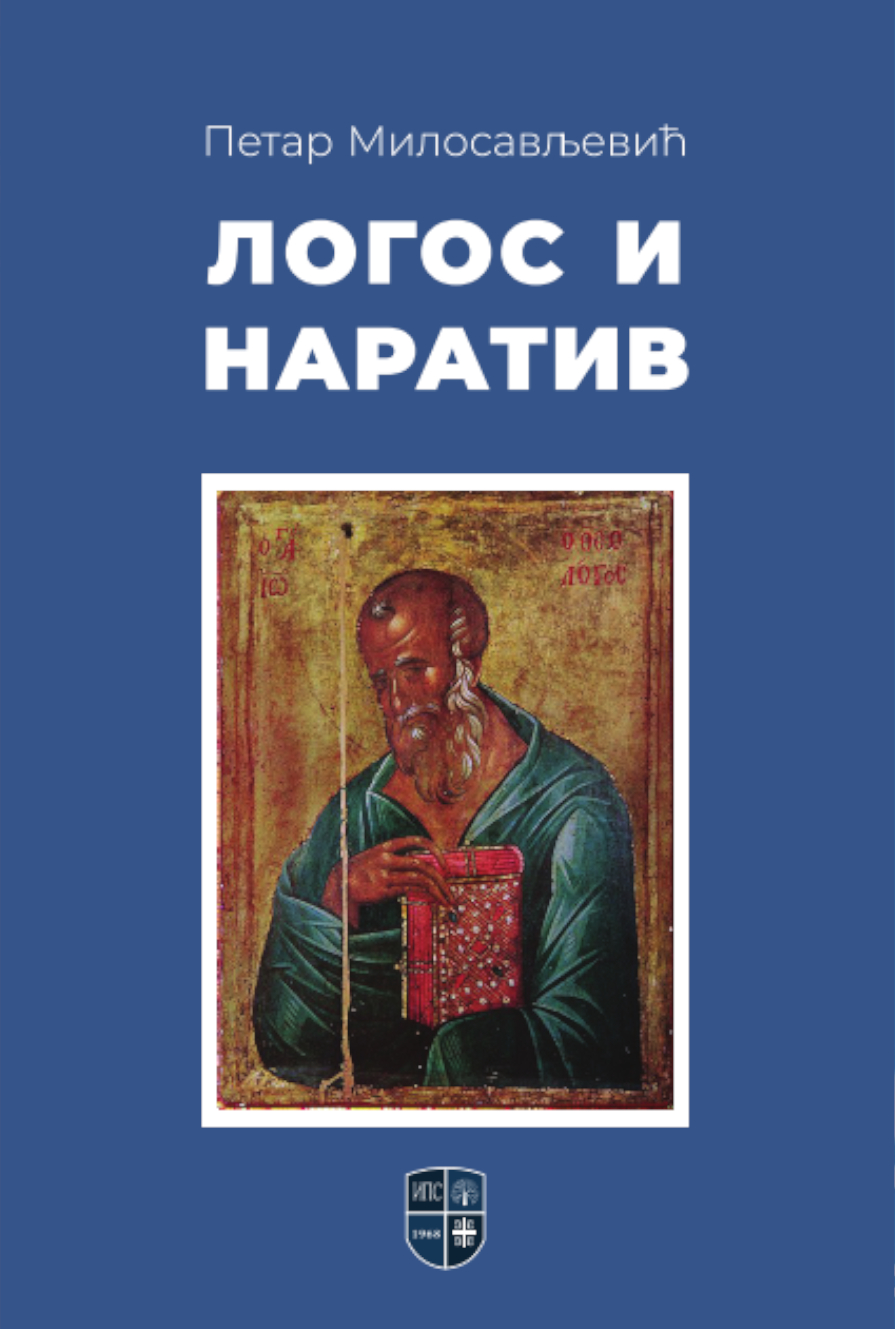
The author of the book, Petar Milosavljević, deals with problems of methodology, but also of political science and narratology. He therefore believes that the research presented in this book could be useful for better navigating the world we live in. Especially if special attention is paid to an insufficiently illuminated phenomenon – narrative. Narratives have always been an integral part of human history, and are therefore also part of the history of the Serbian people. They are particularly important for building the national identity of all peoples, including the Serbian one. This was the case until the narratives of the Serbian idea began to be suppressed by the Croatian idea of Yugoslavism and the Croatian idea of Serbo-Croatism. The suppression of the Serbian idea was also contributed to by the narratives that served these ideas. They did this especially in the field of philology and national sciences. The entire educational system found itself under the control of the ruling ideas and narratives. For decades, he has been working on the wrong construction of consciousness among young people based on adopted narratives. In these narratives, there was a lot of rhetoric, fine words, empty promises, and deliberate performance. But, still, something was missing. There was no logos. This means that the narratives were based on a way that they did not bring permanent solutions, but rather short-term ones, calculated for one-time use.
It is possible to establish exactly when and where the ancestors of today's Serbs made a mistake. They made a mistake during the creation of the first Yugoslavia when they accepted the position that they were just a tribe of a tri-named and tri-tribal people (1917–1918). And they made a mistake when they accepted the position in the Vidovdan Constitution that their language should receive a tri-national name: the Serbian-Croatian-Slovenian language. In addition to other mistakes that were made at that time, these are the main ones. They are great mistakes about the logos itself. There are no other peoples in Europe who have made such mistakes. And there are no peoples who have paid for them so dearly. These mistakes should be noted in order to understand the essence of the efforts of Serbian philologists who, after the breakup of Yugoslavia, gathered around the Movement for the Renewal of Serbian Studies (it was proclaimed at the Faculty of Philology in Pristina in 1997). The essence of this effort is: for the Serbs to return to their philological tradition that grew on the logos of the philological tradition of other European peoples, to, instead of the ruling Serbo-Croatian studies, renew the discipline about the Serbs – Serbian studies. In this way, they would return to the system of European philologies from which they were expelled with the creation of Yugoslavia. Having lost the scientific discipline about themselves in the newly created state of Yugoslavia, the Serbs lost the foundations of their defense mechanism. They became a people with nothing to defend themselves with; a people who agreed to slowly disintegrate. And Serbian studies, as a creation, should be seen as a work. And it is a narrative on which all national sciences concerning Serbs can be built. What recommends it are its foundations.
Serbian studies can also be understood as a narrative. But it is not a narrative built on narrative truth, as Lyotard calls that truth, but a narrative built on logos. This discipline should defend itself against the logos of other national philological disciplines. And justify itself before the logos of general and Serbian history; by striving for Serbs, in philology, to find an adequate place in relation to other peoples