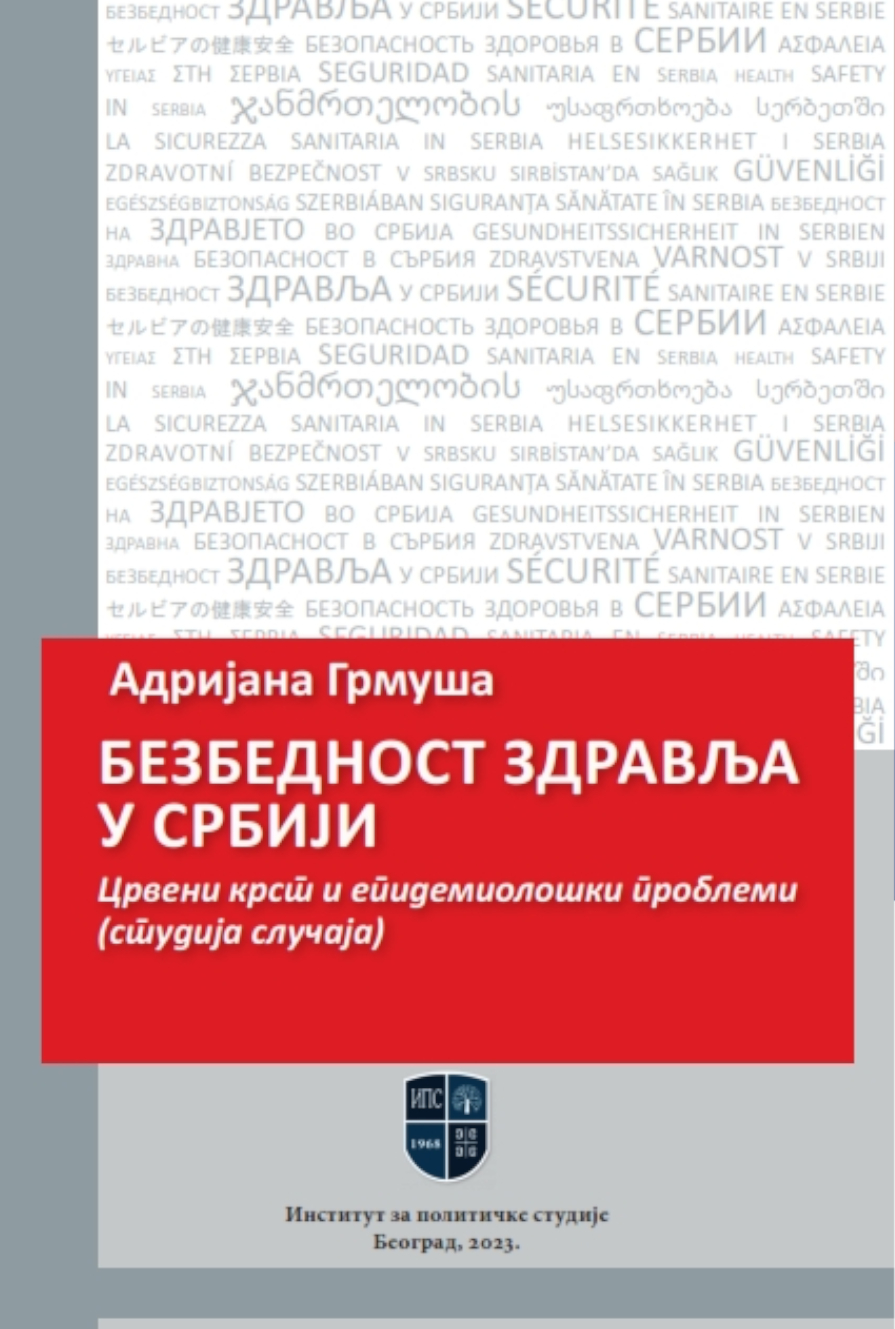
HEALTH SECURITY IN SERBIA: Red Cross and epidemiological problems (case study)
Grmuša, Adriana. 2023. Health Security in Serbia: The Red Cross and Epidemiological Problems: A Case Study. Belgrade: Institute for Political Studies.
ISBN 978-86-7419-371-6
A unique scientific monograph by Dr. Adriana Grmuša, deals with the issues of the activities of the Serbian Red Cross and its participation in dealing with epidemiological problems. Not lagging behind Europe at that time, the first national Red Cross society in Serbia, under the name Serbian Red Cross Society, was founded on February 6, 1876 in Belgrade, in accordance with the ideas of Andriy Dunant and the provisions of the Geneva Convention of 1864. The activities of the Serbian Red Cross were primarily related to supporting the Serbian army in six wars: two Serbian-Turkish wars (1876-1878), the Serbian-Bulgarian war (1885), the Balkan wars (1912-1913) and the First World War (1914-1918).
The importance of the work of the Serbian Red Cross Society is vividly illustrated by the report from the last session of the Main Board from December 25, 1921: The Second World War and the years after the war represented the most challenging period for the Society in the midst of refugees, lack of drinking water and basic hygiene conditions. The turbulent periods of our history were marked by epidemics of many diseases, such as typhus, cholera and tuberculosis, to which the author of this monograph devoted special attention. After the Cold War, the world faced new challenges, primarily non-military threats. The new wave of globalization brought the danger of the spread of other infectious diseases, and the activities of the Serbian Red Cross were directed accordingly.